Small black horizontal line on a white background

FENCE CLEANING

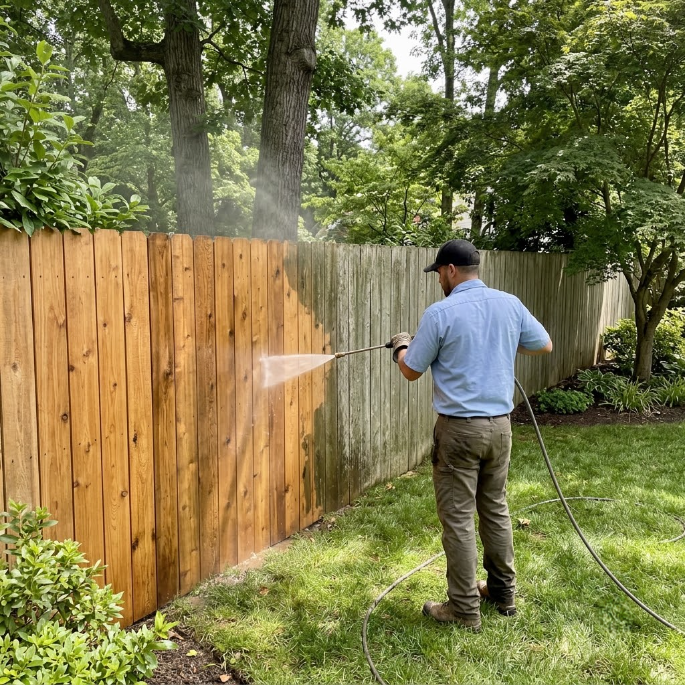
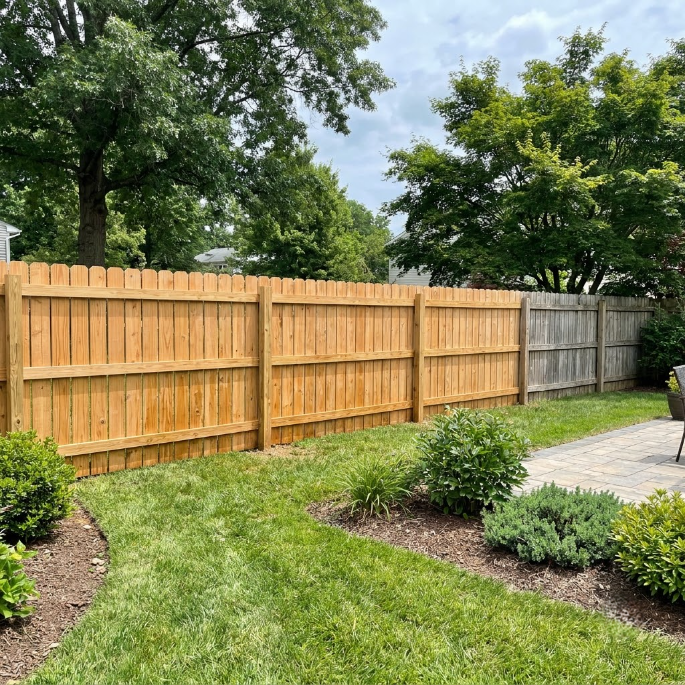
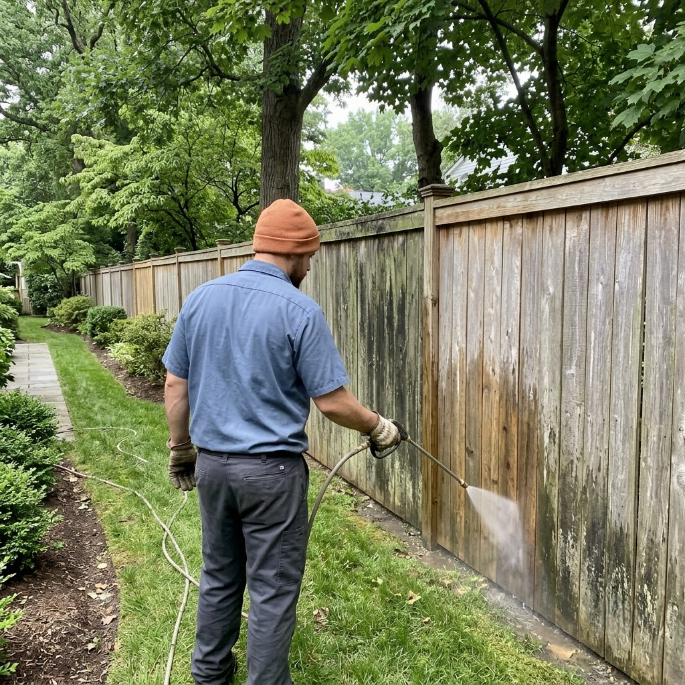
Softwood fencing cleans in a pressure band roughly between 500 and 1,500 psi, a fraction of what concrete takes, and anything beyond it tears the surface fibers and leaves the boards furred. Stain will not sit properly on wood in that condition. Metro Mobile Pressure Washing cleans wood, vinyl, composite, and metal fencing across Fort Washington, MD, working at the pressure each material tolerates and preparing wood correctly when a finish is going on afterward. Wood forgives very little.
Construction workers pouring concrete at a building site, with a truck in the background
Wet concrete pouring from a truck chute onto a construction site, forming a gravelly slab surface

PRESSURE THAT CLEANS CONCRETE WILL RUIN A FENCE BOARD.

This is the most common piece of damage we are called out to repair, and it is almost always self-inflicted with a rented machine. The wood looks clean while it is wet, then dries to a fuzzy, splintered surface with visible tracks where the wand moved too slowly across the grain. None of that comes back.

Wood needs a wide fan tip, a sensible distance, and a cleaner doing most of the work. Get those three right and the boards come back to color without losing any surface at all.

  • Low pressure and a wide fan on all wood
  • Cleaner and dwell time instead of force
  • Honest drying advice before any stain
  • Plants along the fence line protected
Black horizontal line on a white background
FENCE CLEANING

A FENCE GOES GREEN FIRST AND GETS WASHED LAST.

It sits low, it stays damp, it collects soil splash from every storm, and it usually runs along the shadiest boundary of the property. Everything that makes exterior growth thrive is concentrated on that one structure. Yet fencing is the surface most owners forget entirely until the day they look up and realize the whole run has turned dark green and gray. It is the surface that rewards attention most.

SHADE, SPRINKLERS, AND SOIL SPLASH DO THE DAMAGE HERE.

Fences in this county are usually backed by mature trees or planted beds, which means shade and moisture on the same face for most of the year. Irrigation adds a daily soaking near the posts, and rain throws soil up the bottom boards. Those three together explain nearly every fence we are asked to look at in Fort Washington. The pattern almost never varies.

A FENCE TELLS YOU WHEN IT IS READY, IF YOU LISTEN.

The single most common mistake is staining too soon. Wood that looks dry on the surface can still be carrying too much moisture underneath, and a finish applied then will peel within a season. There is a simple water test that settles it, and 26 years of doing this has taught us to insist on it rather than trust the weather forecast. Shall we look at your run?

WHY CHOOSE US FOR FENCE CLEANING.

Hand washing a car under running water, black outline icon
BOARDS BACK TO THEIR REAL COLOR
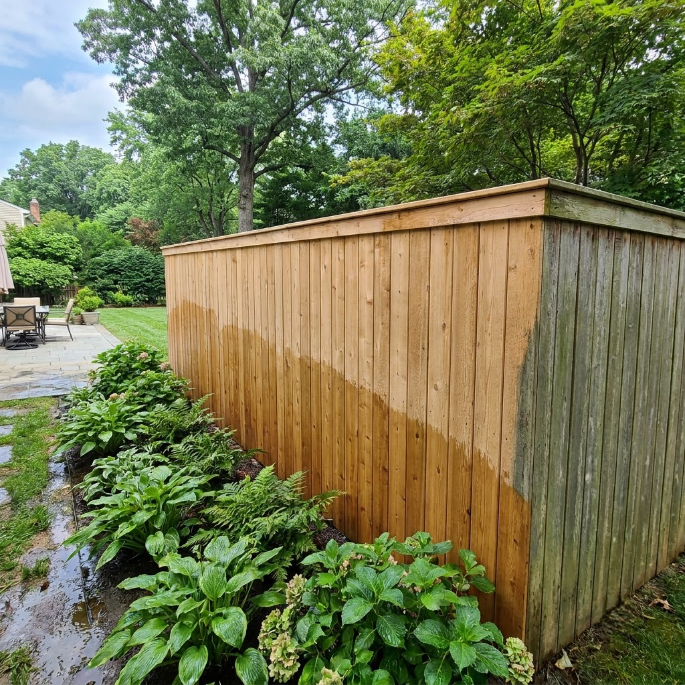
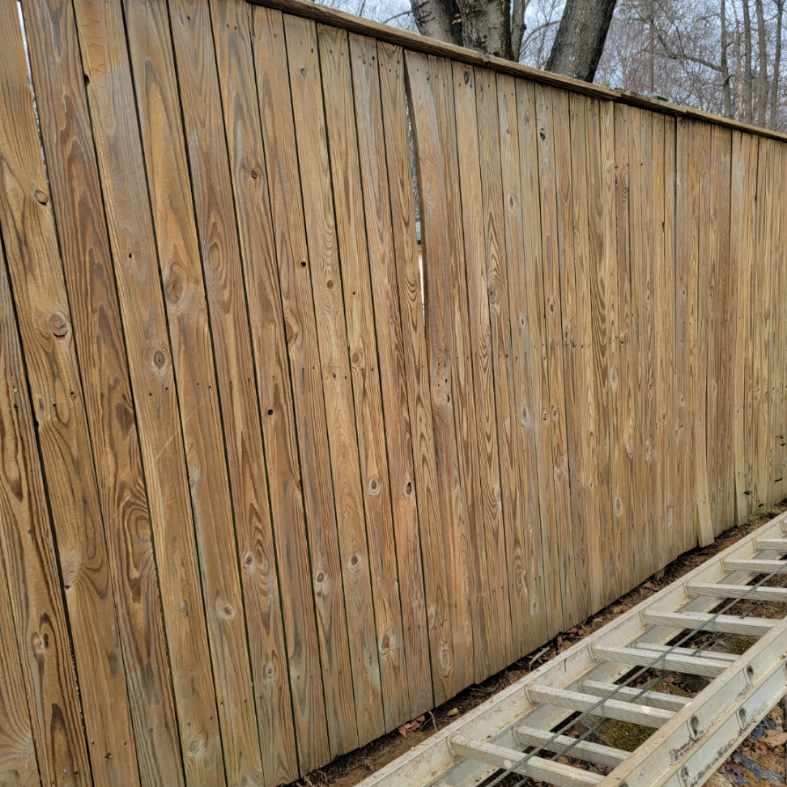
Most owners assume a gray fence has weathered permanently. Under the growth and the atmospheric film there is usually sound wood, and the difference between the two is a single visit.
Hand spraying water over a car illustration, suggesting car washing or cleaning
NO FURRED OR SPLINTERED GRAIN
Once wood fibers are torn open they stay open, catching dirt faster and taking finish unevenly. Low pressure with the right cleaner avoids that outcome instead of repairing it afterward.
Hand using a spray nozzle to wash a car with water droplets around it
A SURFACE STAIN WILL ACTUALLY BOND TO
Finish applied over growth, mill glaze, or a still-damp board fails early and unevenly. Proper preparation is the difference between a stain job lasting seasons and lasting years.
Hand spraying foam over a car, suggesting washing or cleaning.
GREEN OFF VINYL WITHOUT SCRUBBING
Vinyl and PVC panels respond to the correct cleaning solution far better than to elbow grease. No scrubbing, no scuffing, and no chalky patches where somebody worked at one section harder.
Hand washing a car with soap and water spray in black-and-white icon style
PLANTING ALONG THE LINE PROTECTED
Fences are almost always flanked by beds, climbers, or lawn on at least one side. Soaking both sides before we start is what keeps the planting looking as good as the fence afterward.
Hand spraying cleaner onto a car, with bubbles and water splashes
YEARS ADDED TO THE FENCE
Growth holds moisture against wood and moisture is what rots posts and rails. Regular cleaning is a small maintenance habit that meaningfully delays the day the whole run needs replacing.
Short black horizontal line on a white background

our services

OUR FENCE CLEANING WORK

Fencing covers a wide range of materials, and the wrong approach shows immediately on all of them. These are the fence types and situations we deal with most across residential and community properties.
Template premium 99
Wood Fence Washing

CEDAR AND PINE


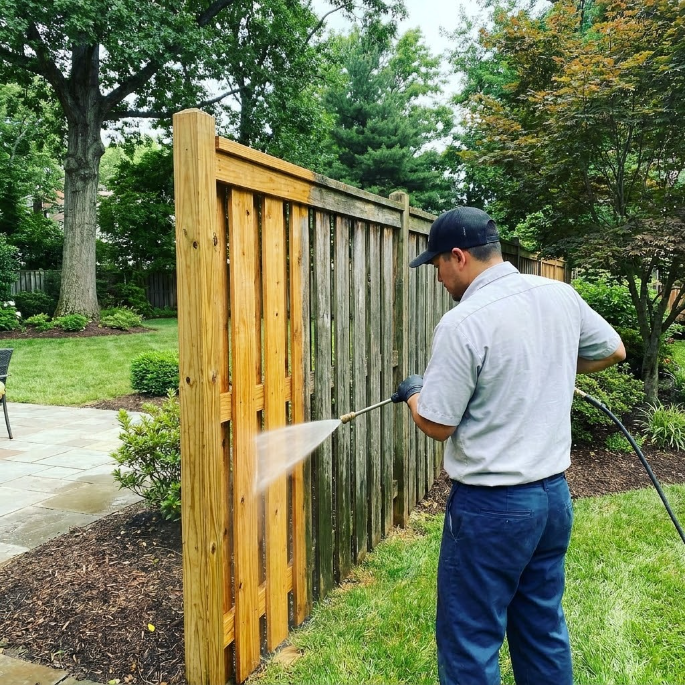
Pickets, rails, and posts cleaned with a wide fan at low pressure, following the grain rather than crossing it. A cleaner does the lifting so the wood surface stays intact and takes finish evenly later.
Template premium 99
Vinyl and PVC Fence Cleaning

VINYL PANELS


Panels, caps, and rails treated with a solution that removes green growth without scuffing the surface. Vinyl marks permanently under aggressive cleaning, so chemistry carries the work and pressure stays gentle.
Template premium 99
Aluminum and Chain Link Fencing

METAL LINES


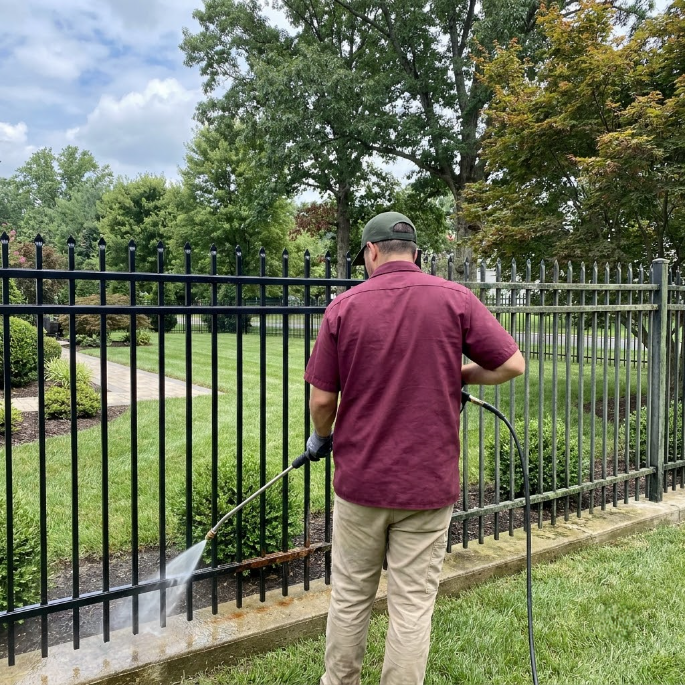
Ornamental aluminum, wrought iron, and chain link cleaned of growth, oxidation film, and soil splash. Coated metal needs care around any existing rust so the cleaning does not accelerate what is already starting.
Template premium 99
Pre-Stain Fence Preparation

PREP WORK


Cleaning done specifically so a finish can follow, including a brightener where the wood needs its color evened out. We give you a clear window for when the run will be dry enough.
Template premium 99
Mold, Algae, and Mildew Removal

SHADED RUNS


Targeted treatment for the boundary that never gets sun, where growth is heaviest and returns fastest. Treating the organism rather than the discoloration is what stops it coming back by midsummer.
Template premium 99
Gates, Posts, and Retaining Walls

BOUNDARY EXTRAS


Gate hardware, post caps, pergola legs, and the low retaining walls that often run alongside a fence. Boundary structures look wrong when only part of the line has been cleaned.
A short black horizontal line on a white background.

THE WORD ON OUR WORK

WHAT OUR CLIENTS SAY.

Fence work surprises people more than anything else we do, because almost nobody expects gray boards to come back. The other comment we get regularly is about the responsiveness, with jobs scheduled within a day or two of the first call.
Black horizontal line on a white background
FAQ

FREQUENTLY ASKED QUESTIONS.

Nearly every fence question we get is really about staining, either whether to wash first or how long to wait afterward. Here is the practical answer to both.

    Is it okay to pressure wash a wooden fence?

    Yes, at the right setting. Softwood cleans in a band well below what concrete needs, with a wide fan tip and sensible distance. Push past that and you tear the fibers and leave a permanently furred surface behind.


    Should a fence be washed before it is stained?

    It should. Stain bonds to clean wood and fails early over growth, dirt, or a weathered gray layer. Cleaning first is the step that decides whether the finish lasts a couple of years or the better part of a decade.


    How long should a fence dry before staining?

    Manufacturers differ, with guidance ranging from about 24 hours to a couple of days of dry weather. Humidity extends it here, so plan for longer than the label suggests rather than exactly what it says. Wood decides, not the calendar.


    How can you tell whether wood is dry enough to stain?

    Sprinkle water on the boards. If it beads and sits on the surface, the wood is still too wet. If it soaks straight in within a few seconds, the fence is ready for a finish to go on.


    How do you get green mold off a vinyl fence?

    A mild cleaning solution and some dwell time, then a gentle rinse. Metro Mobile Pressure Washing cleans vinyl fencing across Fort Washington, MD this way, since scrubbing at the panels leaves visible marks that never fully disappear afterward.


    How often should a wood fence be cleaned?

    Every year or two for most runs, and annually where the fence sits in permanent shade or beside irrigation. Cleaning on that rhythm also gives you a regular look at the posts and the base of each board.


    What is the best cleaner for a wood fence?

    A dedicated wood cleaner that handles the growth, often followed by a brightener that evens out the color afterward. Household bleach alone lightens the surface without addressing what is actually living down in the grain of the boards.


    How long does it take to clean a fence?

    A typical residential run takes a few hours, both sides included. Metro Mobile Pressure Washing handles long boundary fences and community lines around Fort Washington, MD in sections so gates and access stay usable throughout the whole job.

    Black horizontal rounded bar on a white background
    HOW WE WORK

    FROM GRAY BOARD TO FINISHED RUN, HERE IS HOW.

    STEP 01

    Identify the material and its condition
    Cedar, pine, pressure-treated, vinyl, and composite all take different treatment, and a run that has already been damaged by a previous wash needs a gentler approach than one that has never been touched before.

    STEP 02

    Soak the beds on both sides
    A fence has planting on one side and very often on both. Everything within reach gets wetted thoroughly with clean water before any solution is mixed, which is the only protection that reliably works.

    STEP 03

    Apply the cleaner and let it work
    A wood-appropriate cleaner goes on and is given time to break down the growth and the gray. This is what allows the pressure to stay low, and low pressure is what keeps the grain intact.

    STEP 04

    Rinse with a wide fan, following the grain
    Rinsing runs along the boards rather than across them, at a distance that stays constant. Consistency matters here, because a lingering wand mark on a fence is visible for the life of the wood.

    STEP 05

    Brighten where the color needs evening
    Wood that has weathered unevenly benefits from a brightener afterward that neutralizes the cleaner and brings the tone back together. It is a short step and it changes how the whole finished run reads.

    STEP 06

    Confirm the drying window
    Before we leave, we tell you when the run should be ready for stain and how to test it yourself. Rushing that step is what causes most of the peeling fences we are later asked about.
    Black horizontal line on a white background
    GET YOUR FREE ESTIMATE

    SEE WHAT IS UNDER THE GRAY ON YOUR FENCE, FREE.

    We will clean a test section so you can see the actual color of the wood, then price the full run in writing with no obligation attached. Senior discounts are available. Start through the contact page.
    WHAT YOUR FREE ESTIMATE COVERS:
    • A cleaned test section for comparison
    • The full run measured, both sides
    • An honest view on boards past saving
    • Guidance on timing if staining follows
    • Gates, posts, and caps included
    • A written figure with no obligation