DUMPSTER PAD CLEANING
DUMPSTER PAD CLEANING IN FORT WASHINGTON, MD
THE PAD IS WHERE A CLEAN BUSINESS GETS JUDGED.
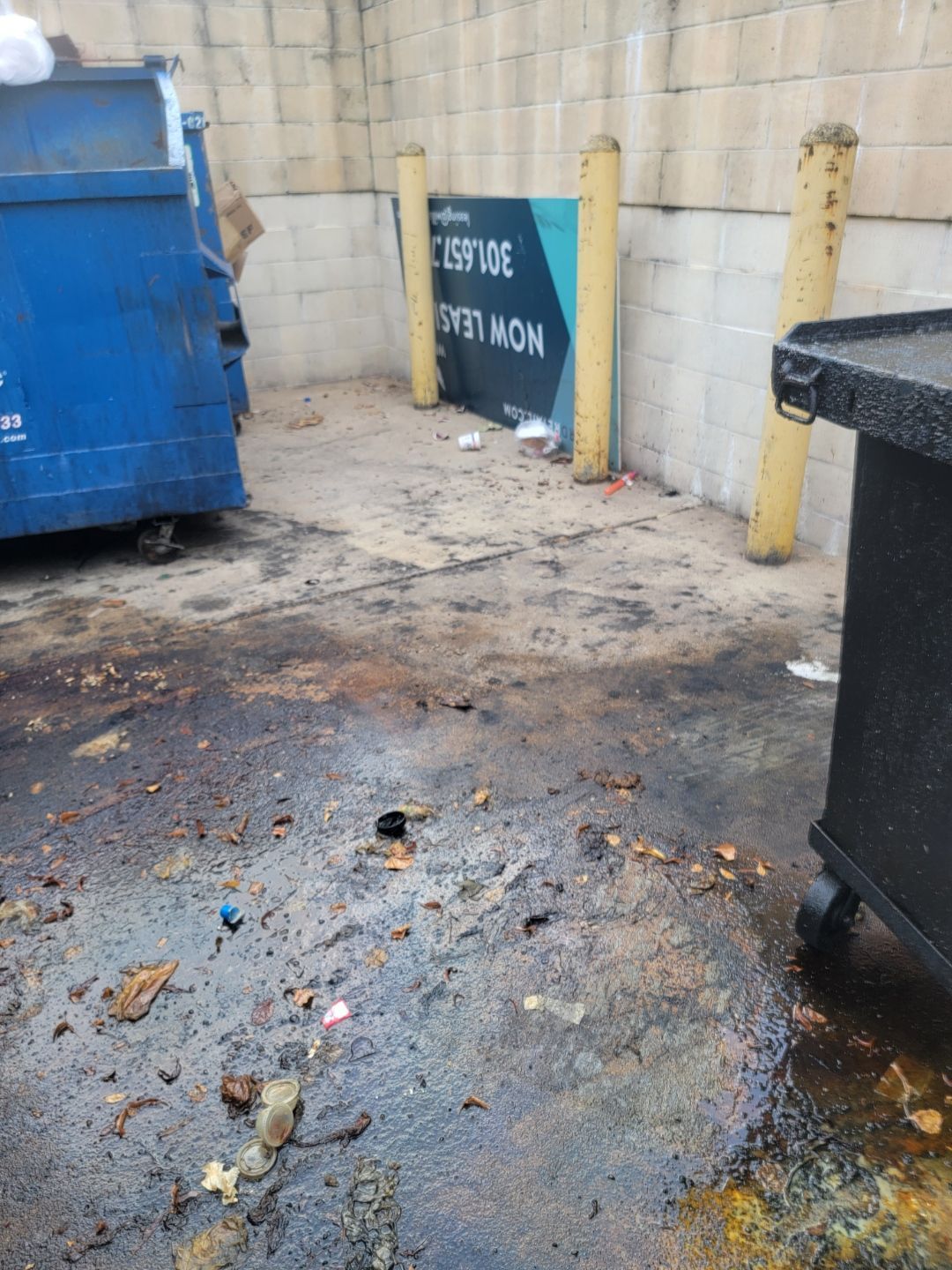
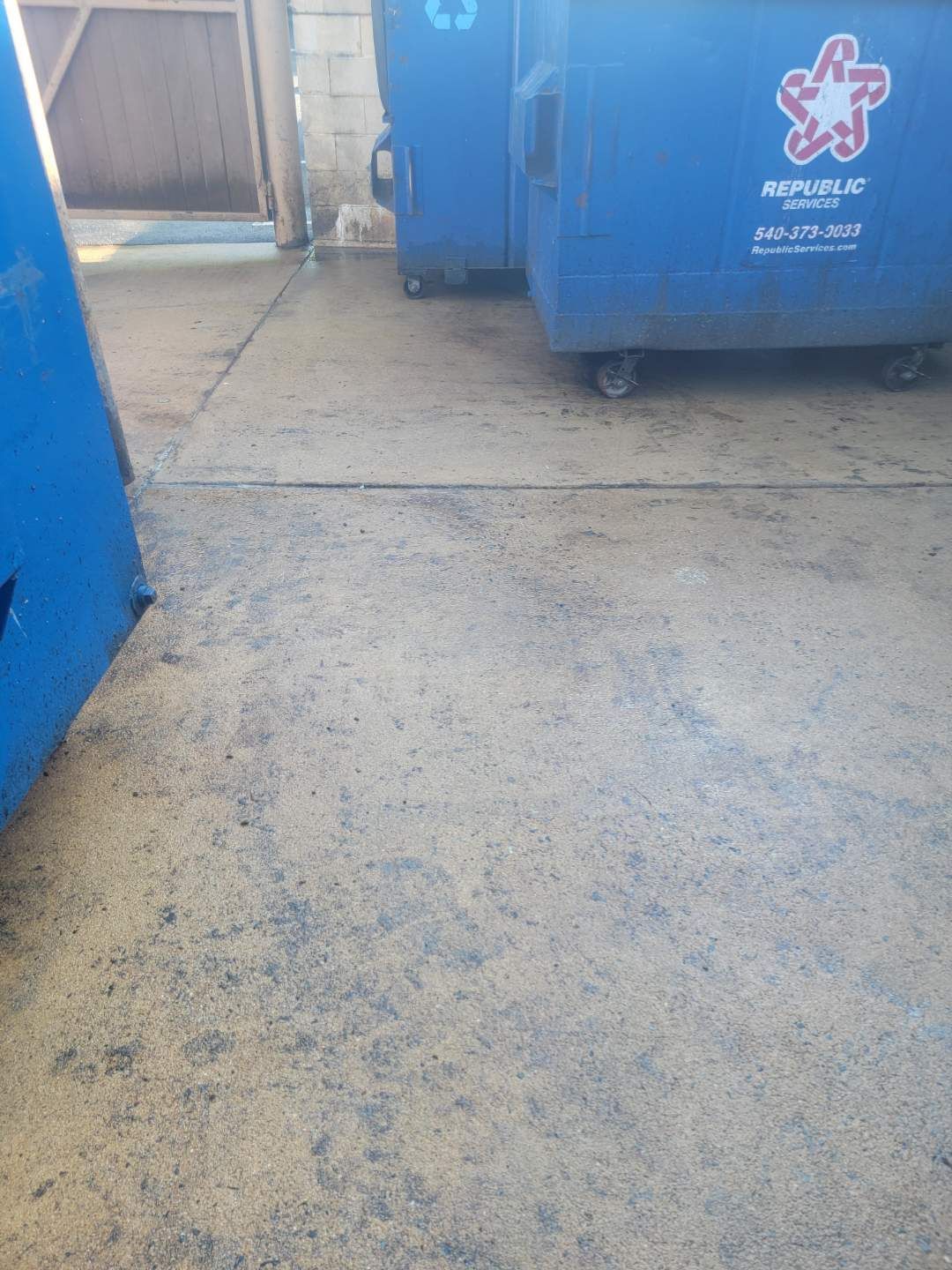
Front of house can be spotless while the corral behind the building is doing real damage to your reputation. Staff walk through it several times a shift and track what is on it back inside. Delivery drivers see it, tenants smell it, and in a mixed-use property the neighbors upstairs certainly notice it too.
None of that is solved by rinsing. Grease bonds to concrete and needs heat and chemistry to release, which is exactly what separates a cleaned pad from a wet one.
- Heated water that emulsifies set grease
- Degreaser applied and given dwell time
- Enclosure walls, gates, and bollards included
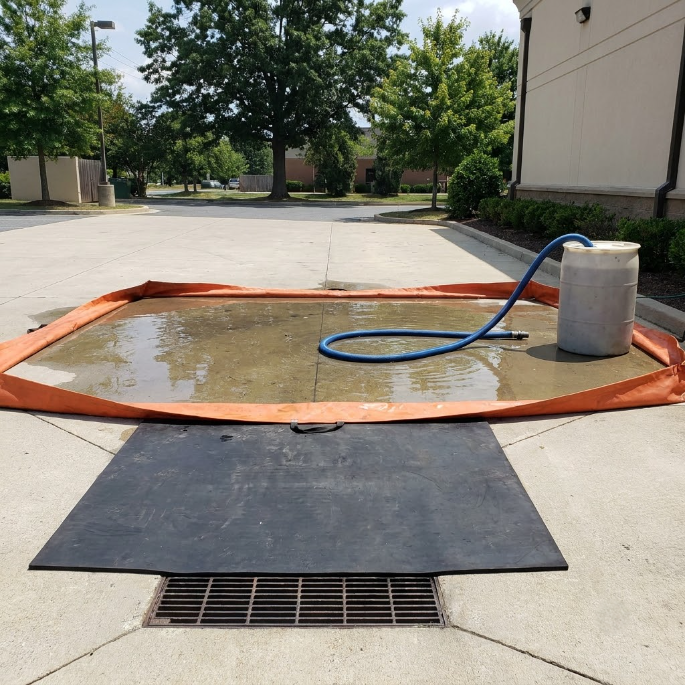
- Wash water captured, never sent to a drain
GREASE DOES NOT EVAPORATE. IT SOAKS IN AND FEEDS THINGS.
MARYLAND ALREADY TELLS YOU WHERE THAT WATER GOES.
NOBODY LEARNS GREASE FROM A MANUAL.
WHY CHOOSE US FOR DUMPSTER PAD CLEANING.
A PAD THAT PASSES INSPECTION
ODOR CUT AT ITS SOURCE
FEWER PESTS BEHIND THE BUILDING
RUNOFF HANDLED CORRECTLY
GREASE OFF THE PATH INSIDE
A SCHEDULE THAT MATCHES YOUR VOLUME
our services
OUR DUMPSTER PAD CLEANING WORK
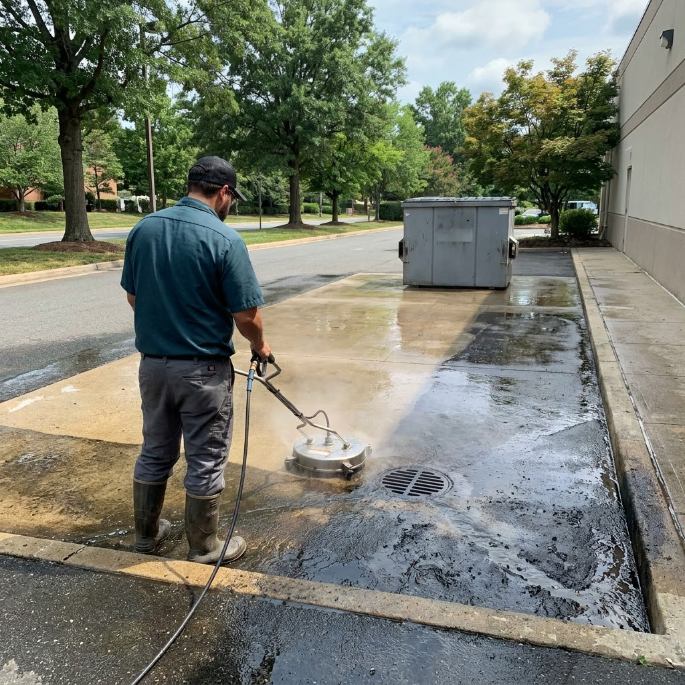
PAD SURFACE
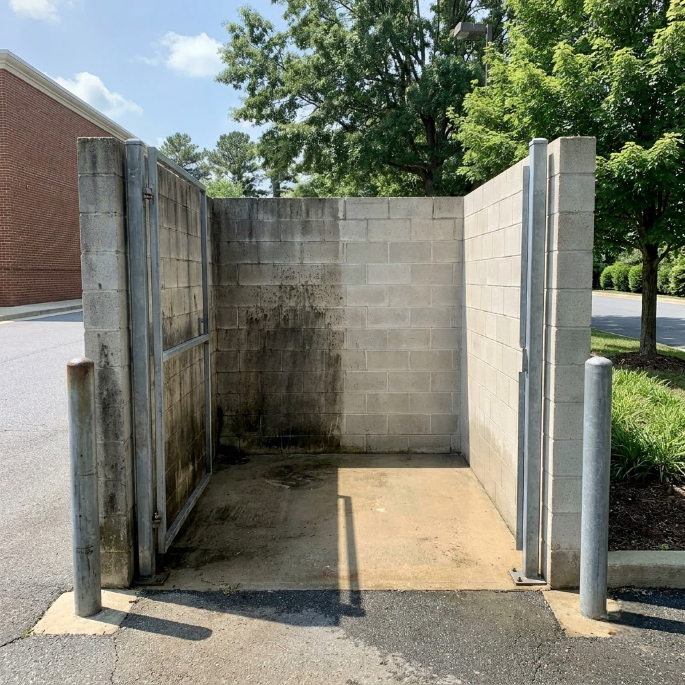
ENCLOSURES
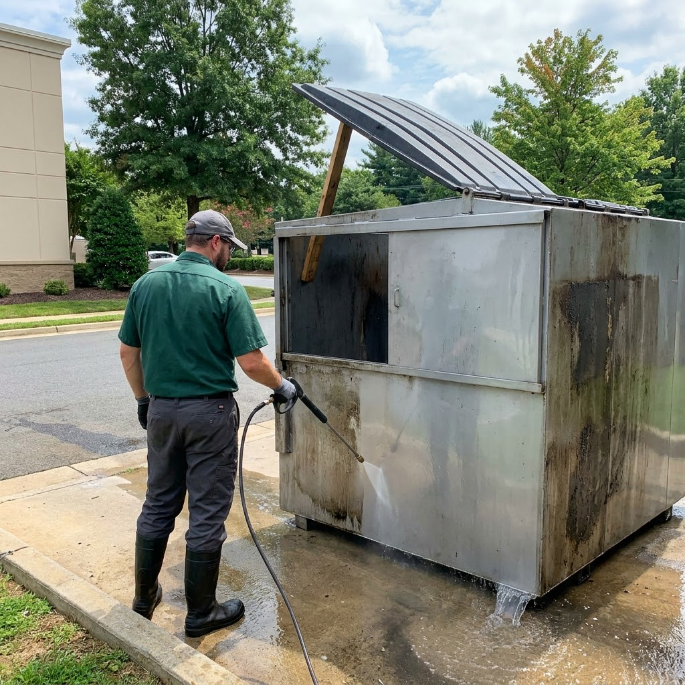
CONTAINERS
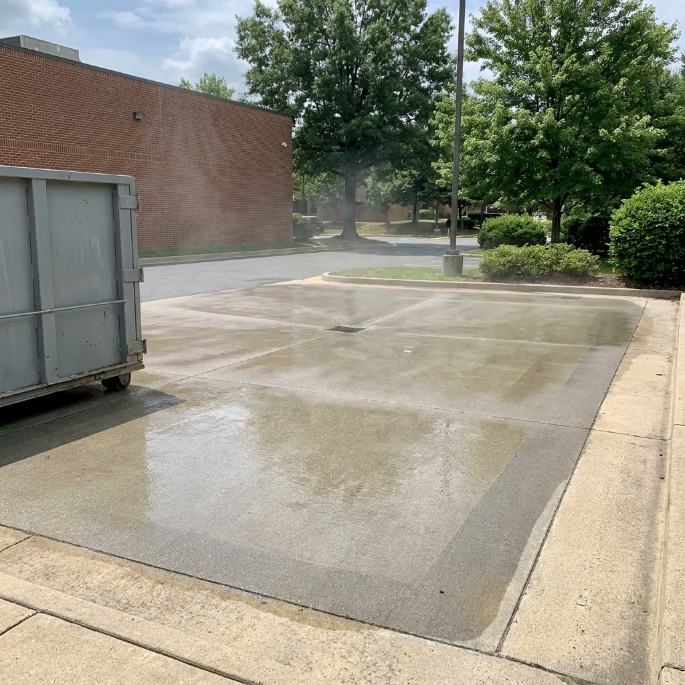
ODOR CONTROL
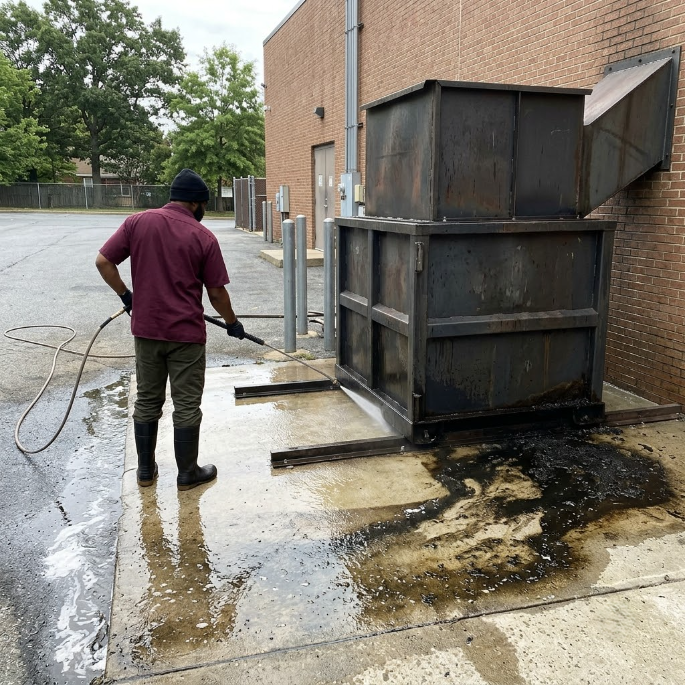
COMPACTORS
RUNOFF
THE WORD ON OUR WORK
WHAT OUR CLIENTS SAY.
FREQUENTLY ASKED QUESTIONS.
How often should a dumpster pad be cleaned?
Restaurants and grocery sites generally need monthly attention, and some busy kitchens want it done more often than that. Offices, retail, and multifamily properties usually hold up well on a cycle of every 2 or 3 months instead.
What exactly is a dumpster pad?
The concrete slab a waste container sits on, usually inside a walled or fenced corral of some kind. Food code requires that surface to be nonabsorbent, smooth, durable, and sloped so that it drains rather than holding liquid in place.
Do you use hot water for dumpster pad cleaning?
Always. Grease is the entire problem on a waste pad, and cold water simply relocates it. Heat lowers the surface tension enough for the degreaser to lift residue that has bonded down into the pores of the concrete.
What actually takes grease off concrete?
A degreaser with genuine dwell time on it, followed by heated water. Applying either one alone leaves a slab that looks improved and smells identical, because the residue sitting below the surface has not actually been touched at all.
Does cleaning a dumpster pad reduce odor?
Significantly, because the smell comes from organic material absorbed into the concrete rather than from the container itself. Metro Mobile Pressure Washing follows the wash with a deodorizing treatment on every commercial pad we clean in Fort Washington, MD.
Do dumpsters attract rats?
The food residue around them does. A greasy pad, split bags, and a container that never gets washed create a reliable food source, and clearing the ground properly removes most of the reason for anything to keep visiting at all.
Where does the wash water go?
Into containment first, and then to an approved disposal route, never into a storm drain. Metro Mobile Pressure Washing captures runoff on every commercial pad in Fort Washington, MD, because state rules treat that wash water as sewage.
Do you clean the enclosure walls and gates too?
Yes, they are part of the job rather than an addition to it. Splash residue and handprints climb the walls and the gate frames, and a clean slab inside grubby walls does not look like a finished result.
FROM LOADED PAD TO CLEAN CORRAL, HERE IS HOW.
STEP 01
Coordinate with your hauler
STEP 02
Dry clean before any water
STEP 03
Protect the drains and set containment
STEP 04
Degrease and let it dwell
STEP 05
Wash with heat and recover
STEP 06
Treat, inspect, and dispose
PUT YOUR WASTE AREA ON A SCHEDULE, FREE.
WHAT YOUR SITE ASSESSMENT COVERS:
- The slab, walls, gates, and drainage reviewed
- A frequency matched to your waste volume
- Wash-water handling explained in advance
- Coordination with your collection schedule
- Compactor and chute areas included
- A written figure with no obligation